Rare WW2 Jeep - Photo Archive - Following On From No 1
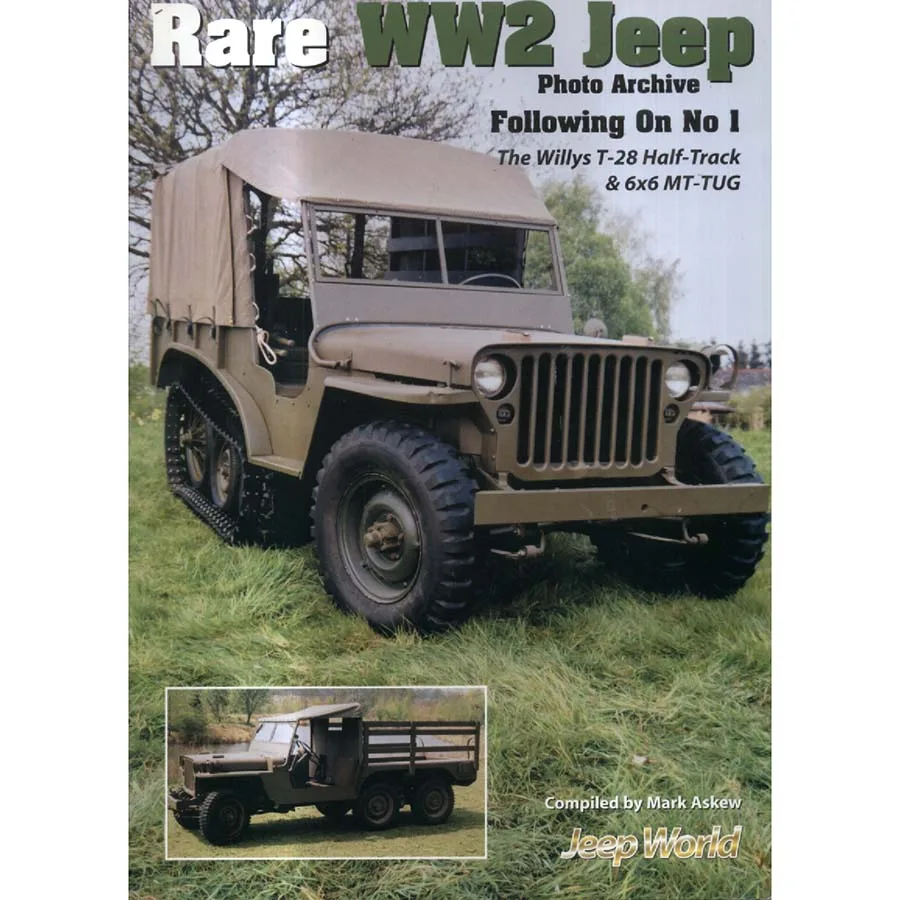
Publisher: Jeep Books
Format: Paperback
ISBN: 0953447065
There are photographs of military vehicles, and then there are photographs of military vehicles so obscure that even the most dedicated enthusiast may be forced to put down his tea, adjust his spectacles and declare, with mounting excitement, that he has never seen that particular arrangement of brackets before. For devotees of the legendary wartime Jeep, such discoveries represent moments of almost unimaginable pleasure, considerably more satisfying than anything involving modern entertainment technology.
In Rare WW2 Jeep – Photo Archive: Following on from No. 1 (2003), Mark Askew continues his exploration of the extraordinary photographic history of the famous American military Jeep. Published by Jeep Books, this specialist volume celebrates the vehicles, variations and wartime circumstances that made the humble Jeep one of the most recognisable machines of the Second World War.
The Jeep was a masterpiece of practical engineering, developed under considerable pressure to provide American forces with a lightweight, versatile and exceptionally capable military vehicle. Manufactured principally by Willys-Overland and Ford, it became an indispensable servant of Allied armies, transporting soldiers, equipment, ammunition and senior officers across virtually every imaginable landscape.
From muddy European lanes and North African deserts to Pacific jungles and snow-covered mountain roads, the Jeep demonstrated an extraordinary willingness to tackle conditions that would have reduced an ordinary motor car to a collection of expensive mechanical regrets.
Askew’s photographic approach offers a particularly appealing perspective on this remarkable machine. Rather than merely celebrating beautifully restored examples photographed at modern military vehicle rallies, historical images provide a glimpse of Jeeps performing the duties for which they were originally intended, often in circumstances involving rather more urgency than a weekend excursion to a country show.
For enthusiasts, the fascination frequently lies in the details. Different equipment arrangements, field modifications, unusual body fittings and variations between manufacturers can provide valuable insights into how these vehicles were actually used. What appears to the casual observer to be simply another small olive-drab motor car may reveal an extraordinary amount of information to somebody who has spent twenty years studying wartime Jeep production.
Of course, the title’s promise of rare photographs is particularly attractive to collectors, who already possess enough conventional Jeep images to wallpaper a moderately sized house. Finding something genuinely unusual is an achievement worth celebrating, preferably by immediately showing it to another enthusiast who will appreciate the significance of a slightly different windscreen hinge.
The book also serves as a reminder of the Jeep’s remarkable adaptability. Military personnel frequently modified their vehicles to suit local conditions and operational requirements, creating an enormous variety of configurations that continue to fascinate historians and restorers.
Condition: As New. This copy is in exceptional condition, presenting as new despite its 2003 publication date. Unlike a genuine wartime Jeep, it requires no replacement canvas hood, specialist welding, expensive restoration or painstaking removal of seventy years of accumulated mud.
Published by Jeep Books in 2003. ISBN: 0953447065.
Offered by Crappy Old Books, where we appreciate obscure military vehicle photographs, particularly when studying them does not involve crawling beneath an elderly Jeep with a torch and a collection of increasingly inadequate spanners.
An excellent addition to any collection of wartime Jeep literature, Second World War photography or military vehicle reference books. Particularly recommended for enthusiasts who understand that the difference between an ordinary photograph and an extraordinary historical discovery may be nothing more than a tiny mechanical detail that nobody else has noticed.
Keep browsing: See more War books Other books by Mark Askew